
Amit Kapoor
 0 comment
 14 Jun, 2025
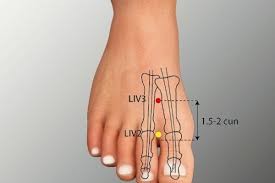
The Complete Guide to LIV 3 Tai Chong (太衝): Clinical Applications and Point Combinations
Introduction
LIV 3 Tai Chong (太衝), known as "Great Surge" or "Supreme Rushing," stands as one of the most frequently utilized and clinically significant acupuncture points in Traditional Chinese Medicine[1][2]. Located on the Liver meridian, this powerful point serves as both a Shu-Stream and Yuan-Source point, making it the primary point for calming the liver and regulating Liver Qi[3]. The Chinese name "Tai Chong" translates to "great rushing," referring to the abundant flow of Qi at this location, which serves as an important energetic gateway on the foot[3].
Anatomical Location and Needling Technique
Precise Location
LIV 3 is located on the dorsum of the foot, in the depression distal to the junction of the first and second metatarsal bones[4][2]. To locate this point accurately, practitioners should run a finger from Xingjian LIV-2 along the groove between the first and second metatarsal bones, finding LIV-3 at the widest and deepest part of the groove[2].
Needling Method
The point should be punctured perpendicularly 0.5-1 cun vertically or slightly obliquely[2][3]. The standard needle insertion depth ranges from 0.3-0.5 cun for basic treatments, with deeper insertion up to 0.8 cun for more intensive therapeutic effects[3].
Clinical Functions and Therapeutic Actions
Primary TCM Functions
LIV 3 serves multiple crucial functions in Traditional Chinese Medicine[2][5]:
· Subdues Liver Yang: Effectively treats migraine headaches, dizziness, blurred vision, and head numbness
· Clears Interior Wind: Calms muscle spasms, contractions, and cramps
· Regulates Rebellious Qi: Addresses emotional imbalances including anger, frustration, and worry
· Activates the Penetrating Vessel: Treats gynecological disorders through its connection to Chong Mai
· Calms the Mind (Shen): Promotes emotional stability and mental clarity
Clinical Indications
Research and clinical practice demonstrate LIV 3's effectiveness for treating[3][5]:
Physical Conditions:
· Hepatitis, cholecystitis, and gallbladder disorders
· Hypertension and blood pressure regulation[6]
· Headaches and migraines
· Digestive dysfunctions
· Gynecological disorders including amenorrhea and irregular menstruation
· Muscle tension and spasms
Emotional and Mental Health:
· Stress management and anxiety reduction[1]
· Depression and mood disorders
· Anger and irritability
· General emotional imbalances
Tonification vs Sedation: When and How
Sedation Techniques
LIV 3 is primarily used for sedation rather than tonification, as it specializes in removing excess from the Liver[2]. Sedation is appropriate when patients present with[7][8]:
· Liver Yang Rising: Manifesting as headaches, hypertension, irritability, and red eyes
· Liver Qi Stagnation: Showing as emotional volatility, digestive issues, and menstrual irregularities
· Interior Wind: Presenting with muscle spasms, tremors, and neurological symptoms
Sedation Needle Technique:
According to classical texts, sedation is achieved by lifting the needle forcefully and quickly, then thrusting the needle body slowly and evenly back to the original layer[8]. The manipulating speed change is the core parameter for effective sedation.
Tonification Applications
While less common, LIV 3 can be used for tonification in cases of Liver Blood deficiency or when supporting overall Liver function[9]. Tonification involves thrusting the needle forcefully and quickly, then lifting the needle body slowly and evenly back to the original layer[8].
Optimal Point Combinations
The Four Gates (四关 Si Guan)
The most famous and clinically effective combination involves LIV 3 with LI 4 (Hegu), known as the "Four Gates"[2][10][11]. This combination treats both sides of the body and is exceptionally powerful for:
· Moving Qi and Blood: Addresses stagnation throughout the body
· Pain Management: Particularly effective for chronic pain syndromes
· Emotional Regulation: Calms the mind and regulates rebellious Qi
· Stress Relief: Clinical studies show significant reduction in premenstrual syndrome symptoms when using both points[12]
Gynecological Combinations
For women's health issues, LIV 3 pairs effectively with[2][13]:
· SP 6 (Sanyinjiao): Addresses the intersection of three yin meridians for comprehensive reproductive health
· PC 7 (Daling) and HT 7 (Shenmen): For emotional aspects of gynecological disorders
Hypertension Protocol
Research supports combining LIV 3 with[14]:
· KI 3 (Taixi): For kidney-liver interaction in blood pressure regulation
· ST 36 (Zusanli): For overall constitutional support
· BL 18 (Ganshu) and BL 23 (Shenshu): Back-shu points for organ support
Headache and Neurological Combinations
For neurological conditions, effective combinations include[15]:
· GB 20 (Fengchi): For occipital headaches and neck tension
· DU 20 (Baihui): For vertex headaches and mental clarity
· PC 6 (Neiguan): For calming the spirit and addressing emotional components
Contraindications and Precautions
Pregnancy Considerations
While some sources list LIV 3 among traditionally forbidden points during pregnancy, recent systematic reviews suggest this caution may be overstated[16]. However, clinical prudence dictates avoiding or using extreme caution with LIV 3 during pregnancy, particularly in the first trimester[5][17][18]. The point is traditionally avoided due to its potential to:
· Stimulate uterine activity
· Promote labor when inappropriate
· Affect the Penetrating Vessel, which influences reproductive function
Clinical Contraindications
General contraindications include[19]:
· Active liver disease with hepatic decompensation
· Patients with severe bleeding disorders
· Areas of local infection or inflammation
· Confused or uncooperative patients
Point Combinations to Avoid
Problematic Combinations
While specific research on harmful LIV 3 combinations is limited, clinical experience suggests caution with:
Over-sedating Combinations:
· Multiple liver-sedating points simultaneously (LIV 2 + LIV 3 + LIV 14) may cause excessive energy depletion
· Combining with other strong Yang-descending points without constitutional support
Constitutional Mismatches:
· Using LIV 3 for sedation in patients with underlying Liver Blood deficiency
· Combining with purely tonifying protocols when Liver excess is present
Clinical Monitoring
Practitioners should monitor for signs of over-treatment[5]:
· Excessive fatigue or energy depletion
· Emotional flatness or depression
· Digestive weakness
· Menstrual irregularities in women
Contemporary Clinical Applications
Evidence-Based Uses
Modern research supports LIV 3's effectiveness for[6][12]:
· Hypertension Management: Clinical trials demonstrate significant blood pressure reduction
· Premenstrual Syndrome: Comparative studies show equivalent efficacy to pharmaceutical interventions
· Stress and Anxiety: Measurable improvements in psychological assessment scales
· Pain Management: Particularly effective when combined with LI 4
Integration with Modern Medicine
LIV 3 can be safely integrated with conventional treatments for[1][5]:
· Stress management protocols
· Complementary hypertension therapy
· Adjunctive pain management
· Emotional health support
Conclusion
LIV 3 Tai Chong represents one of acupuncture's most versatile and clinically valuable points[2][10]. Its primary function as a Liver-sedating point makes it indispensable for treating the stress-related disorders prevalent in modern society[1]. The famous Four Gates combination with LI 4 provides practitioners with a powerful tool for moving Qi and Blood throughout the body[11]. While traditional cautions regarding pregnancy use should be respected, contemporary research suggests LIV 3's safety profile is excellent when used appropriately[16]. Success with this point requires proper diagnosis, appropriate needle technique, and careful attention to constitutional factors and point combinations[8]. Whether used alone or in combination, LIV 3 Tai Chong continues to demonstrate why it earned recognition as one of the most important points in the entire acupuncture system.
⁂
1. https://www.acubody.net/lv3-acupuncture-point-stress-management-techniques/
2. https://www.meandqi.com/tcm-education-center/acupuncture/liver-channel/taichong-liv-3
3. https://tcmwiki.com/wiki/taichong
4. https://www.mastertungacupuncture.org/acupuncture/traditional/points/lr3
5. https://www.meine-tcm.com/en/acupuncture-points/acupuncture-point-lv-03/
6. https://www.sciencedirect.com/science/article/abs/pii/S2212958820301087
7. https://musculoskeletalkey.com/needle-technique/
8. https://pubmed.ncbi.nlm.nih.gov/31286735/
9. https://www.healthline.com/health/tonification
10. https://agelessherbs.com/liver-3/
11. https://acupuncturemasterclass.com/the-four-gates/
12. https://repository.mdx.ac.uk/download/e74f1f7ae35e8d9cbe40d71fbf2d0f7a59c95d6e0c5aca304d4433cdae17b72c/340645/english_pmshaedits13062016(2)rev.pdf
13. https://acumeridianpoints.com/liver/liv-3-taichong/
14. https://pubmed.ncbi.nlm.nih.gov/37694322/
15. https://pmc.ncbi.nlm.nih.gov/articles/PMC9226724/
16. https://pmc.ncbi.nlm.nih.gov/articles/PMC4680134/
17. https://yosan.edu/what-are-the-5-forbidden-acupuncture-points/
18. https://csjacupuncture.com/2023/11/08/points-to-avoid-during-pregnancy/
19. http://www.knowledge.scot.nhs.uk/media/CLT/ResourceUploads/4081251/f0b6b8af-54cf-4206-897a-e9a044082e3b.pdf

Amit Kapoor
0 comment